


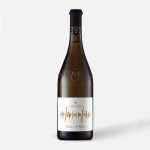

White wine - Milazzo - Bianco di nera
€8.70 – €13.68
Young, fresh, an elegant fruitiness. Bianco di Nera is the FRIZZANTE Milazzo. Unmistakable imprint for our short Charmat. Second fermentation in our autoclaves for a short period to enhance the aromas and softness in the glass with immediate impact. Beautiful pale straw yellow colour with green reflections. The nose releases a rich bouquet in which notes of green apple and white pear combine with light spicy hints reminiscent of aromatic vegetables. On the palate it is fresh and creamy, revealing an excellent savouriness and drinkability.
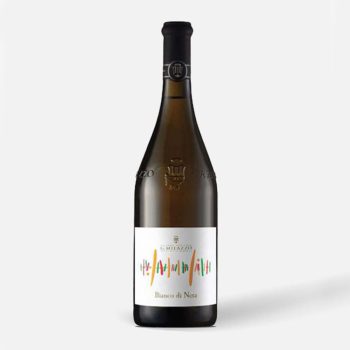
Young, fresh, an elegant fruitiness. Bianco di Nera is the FRIZZANTE Milazzo. Unmistakable imprint for our short Charmat. Second fermentation in our autoclaves for a short period to enhance the aromas and softness in the glass with immediate impact. Beautiful pale straw yellow colour with green reflections. The nose releases a rich bouquet in which notes of green apple and white pear combine with light spicy hints reminiscent of aromatic vegetables. On the palate it is fresh and creamy, revealing an excellent savouriness and drinkability.

This fresh and elegant white wine comes from a thousand-year-old wine-growing area that has re-entered the Italian wine scene in recent years. The volcanic soil typical of the south-eastern slopes of Etna gives this wine a unique character.
24 in stock

✓ 45% almonds
✓ With extra virgin olive oil
✓ Appreciated for quality craftsmanship
✓ Without artificial additives
✓ Rich in nutrients and vitamins from almonds
91 in stock

In 1984, Count Giuseppe Tasca d'Almerita decided to celebrate 50 years of marriage to his wife Franca with a wine that would tell the story of the family and the estate. The uniqueness of the varietal composition is the sign of its romanticism, born from Inzolia and Tasca Sauvignon, a selection from a vineyard present at Regaleali since the end of the First World War. The use of selected yeasts from our own vineyards binds this wine even more indissolubly to its terroir. Fresh at a young age and capable of unsuspected longevity, balancing tertiary aromas with fruit intensity.
White wine - Milazzo - Bianco di nera
Format: Glass bottle 75cl
Intro:
Sicily is one of the most wine-producing regions in Italy, together with Veneto, Emilia-Romagna and Apulia. Sicily's wine-growing traditions are ancient and date back to the Phoenicians, Romans, Greeks and Arabs.
Sicily boasts numerous indigenous grape varieties such as frappato, nero d'Avola, inzolia, catarratto, nerello mascalese and nerello cappuccio, malvasia delle Lipari and moscato d'Alessandria (zibibbo, from the Arabic zibib meaning 'a raisin').
Based on the type of grape, we can understand the cultivation area of the various vines mentioned above:
- Muscat wines, Moscato di Siracusa and Moscato di Noto we find them in the Syracuse area
- Wines based on Nero d'Avola, Frappato and Ceraselo di Vittoria DOCG are produced in the province of Ragusa
- Grillo, Grecanico, Catarratto and Inzolia vines are the protagonists of the Alcamo DOC
- La Malvasia delle Lipari famous Aeolian Islands in the Messina area
- On the slopes of Etna, considered 'an island within an island' due to the characteristic lava soil and the microclimate that characterises this area, we find Nerello Mascalese, Nerello Cappuccio, for red, rosé and sparkling wines and Catarratto and Carricante for white wines. From these vines are produced the famous Etna DOC.
- The province of Caltanissetta is home to one of Sicily's most recent DOCs, the Riesi
- Marsala is a historic DOC that takes its name from the municipality of the same name in the province of Trapani.
- Also in the province of Trapani is the island of Pantelleria, where the Passito di Pantelleria
White wine - Milazzo - Bianco di nera - Data sheet
Grapes: Blend of Nero Cappuccio, Chardonnay and Inzolia
Type of terrain: Organic, rather deep clay soil
Breeding system: Guyot
Harvest period: Late August - mid-September
Mode of collection: Manual in 14 kg crates
Vinification: Soft pressing with pneumatic presses with closed lungs
Maturation: In steel for about 4 months. Second fermentation in autoclave (Martinotti system)
Alcohol: 12 % vol
Find out more:
To find out more about Sicilian wines, products Torrisis and the culinary traditions of Sicily, we recommend you visit our blog, full of interesting and overwhelming articles recounting its many facets. In the section recipes You will also find a wide variety of quick and easy cooking tips, as well as lots of ideas and useful advice on how to make the best use of our products in the kitchen and how to ensure that you create excellent dishes.
| Weight | 1.60 kg |
|---|---|
| price finder | published |
| Lt | 0,375, 0,75 |
You may also like…

The Etna Bianco Superiore Affiu wine is produced by the Eredi Di Maio winery, located in the Sicily region of Italy. This wine is classified as Etna Bianco DOC Superiore and is made from the Carricante grape variety.
20 in stock

Our Etna Bianco classico from Carricante and Catarratto grapes. The cleanliness of this white led us to assign it the name NENTI, a Sicilian word meaning 'Nothing', coupled with NUDDU in a play on words that helps remind us of the modesty of those who work for a satisfying result.
1 in stock
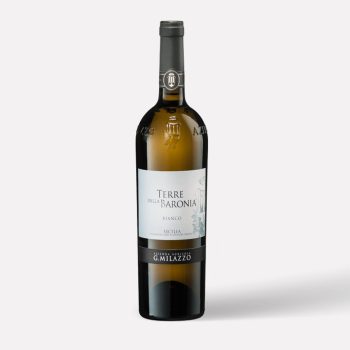
A unique terroir the Terre della Baronia with its 9 areas and related sub-areas. The Garcitella area where we cultivate this selection of Catarratto Lucido offers an environment particularly suited to enhancing the characteristics of this variety. Here the vines produce clusters that offer aromas of ripe tropical fruit rich in nuances, with greater verticality and an evident acidic ridge.
44 in stock
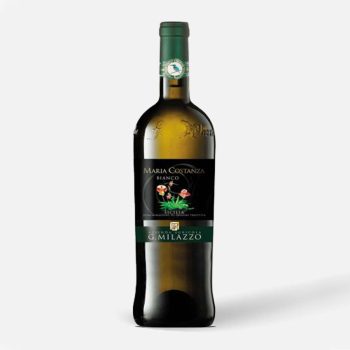
Maria Costanza Bianco represents a milestone in Sicilian viticulture. Our company was in fact the first to blend Inzolia and Chardonnay to create this elegant white wine. It has a beautiful straw yellow colour with green highlights. The nose is seductive. In the opening, hints of white flowers combine well with aromatic vegetables, then emerge enveloping notes of flowers and citrus leaves. In the mouth, it is full and with a nice structure, the sapidity guarantees great taste persistence.
276 in stock

Pale straw yellow in colour with greenish reflections. The nose has fruity notes of peach, with vivid saline memories, scents of sun and sea, mineral freshness, then vegetal notes of celery and sage; more fruit with kiwi, melon, balsamic hints on the finish. In the mouth, it is finely acidic, with honeyed sweet notes imbued with saline sap and brief briny hints of olives in brine. The finish is fluid and caramel-like, still with a delicately saline base, lengths and persistence that prolong the pleasure of tasting, leaving that lively sweet/salty and fruity taste.
4 in stock
Related Products

The typical white wine of south-eastern Veneto, it is made from a blend of Lison Classico and a small percentage of other white grape varieties. A traditional oenological recipe that Tenuta Sant'Anna preserves and continues to improve.
Out of stock

It is a wine that represents the elegance of wines from the Etnean territory combined with the power of the Nerello Mascalese variety. It is vinified in steel and aged for the 90% in 25 hl Salvonia oak casks, and for the 10% in 300 l tonneaux of second and third passage French oak. The nose is complex with notes ranging from black cherry to powdery hints, and the sip is rich and dense, with savoury tannins and a silky touch.
Out of stock

From the best Inzolia pomace selected in Casa Milazzo's vineyards comes this superb Grappa distilled in a discontinuous steam still. Clear and crystal-clear in colour, the nose recognises wild berries, from raspberry to currant, moving on to strawberry and floral notes of rose, on the palate well-structured, warm, clean, with a tendency to dry out, aftertaste has an opening to the floral notes of rose petals, strawberry and blackberry, on a bitter almond finish.
2 in stock

San Francesco is the vineyard that represents the emblem of our work at Regaleali, the incessant research and innovation of our team to improve the quality of our wines. Planted in 1985 by Lucio Tasca, it was divided into two different portions due to the nature of the soil. The higher part, on the south-eastern slope of the Canalotto valley, at an altitude of between 532 and 585 metres, was reserved for Cabernet Sauvignon. The soil is made up of sand and sandstone of variable grain, the texture is partly clayey and calcareous, with a slightly alkaline pH (8.3). It is a moderately deep soil, in which the development of the vine root system is abundant in the first 60 centimetres and more moderate up to one metre deep. It has a normal organic substance content and is rich in minerals such as magnesium and potassium, while it is poor in phosphorous. The vines are planted at a spacing of 2.60 by 1.1 metres (3,490 plants per hectare). The training system is espalier, with short spurred cordon pruning. Cabernet Sauvignon is a late variety, with a very long vegetative arc. The grapes are hand-picked by expert vine-dressers who are able to select the bunches already in the vineyard, and the harvest takes place on average between mid-September and the first ten days of October.

Vigna La Monaca, two hectares planted in 2011 at an altitude of 320 m a.s.l., is characterised by a soil with a more sandy texture (37.4% of sand and 12.5% of clay), which is well aerated, very draining and therefore drier, making the vines less vigorous. The north-eastern exposure ensures good luminosity but less influence from the hot summer temperatures; this means that in the hottest and driest years the vine suffers less, maintaining constant ripening. The presence of active limestone facilitates the development of aromas and the wealth of potassium favours the accumulation of sugars, aromas and anthocyanins. The low vigour, low productivity and the characteristics of the soil are favourable for a balanced and complete ripening of the grapes, more suitable for structured red wines with long ageing. The training system is espalier, with Guyot pruning and a density of 4600 vines per hectare.

Enveloping, whose dense and fine tannins make this wine an extreme expression of its terroir.
4 in stock

"ESTÌ" FROM THE GREEK "HE IS" COMES FROM THE SELECTION OF CATARRATTO GRAPES AND CAREFUL WHITE VINIFICATION; THE 25% OF THE PRODUCT COMPLETES FERMENTATION IN OAK BARRELS AND MATURES FOR AT LEAST A YEAR IN THE BOTTLE. ESTÌ HAS A STRAW YELLOW COLOUR, CITRUS NOTES OF WHITE PEACH AND RIPE TROPICAL FRUIT AS WELL AS DELICATE TOASTED AND VANILLA NOTES
12 in stock

Its name is linked to the family history. Homage to Richard Wagner, who in 1881 in the garden of Villa Tasca in Palermo completed the drafting of the third act of "Parsifal", inspired by the swans that lived in the pond. A selection of Nero d'Avola from the high hills and Cabernet Sauvignon together to show the potential of the Sicilian grape variety and the elegance and austerity of the international variety.

"EIMI' FROM THE GREEK 'I AM' COMES FROM THE SELECTION OF NERO D'AVOLA GRAPES AND CAREFUL RED VINIFICATION. THE WINES, AGED IN BARRIQUES, HAVE AN INTENSE VIOLET COLOUR, AROMAS OF AROMATIC HERBS
AND SPICES IN PARTICULAR BLACK PEPPER AND CHOCOLATE, THE TASTE IS FULL, VELVETY AND VERY PERSISTENT
8 in stock

One of the most stimulating challenges for the company's managers. The project to create a wine of superior quality and rank using the most celebrated and widely planted white grape variety was born in the mid-1980s. The San Francesco vineyard was planted in 1985 by Lucio Tasca, in the lowest portion of the slope, on a soil that is more fertile than the average Regaleali due to a deeper active layer and greater freshness, due to less rainwater drainage.
The clonal material comes partly from Burgundy. The plot covers about 5 hectares, with a planting pattern of 2.60 metres by 1.20 metres (3,200 plants per hectare), at an altitude between 520 and 532 metres. The substratum of origin is clayey-sandy sediment, the texture is loamy-clayey, weakly calcareous, with a slightly alkaline reaction (pH 8.1). It is a thick, well-structured soil, but the roots do not exceed a depth of 70 centimetres.
The soil has a normal organic substance content and is rich in mineral salts, magnesium and potassium in particular, with a good amount of phosphorous. The vines are espalier-trained, with a double Guyot training system.
The grapes are fermented in 350-litre French oak barrels, with batonnage daily for the first 10-15 days, then weekly for the remaining 8 months of ageing. Chardonnay is a very early variety and at Regaleali it usually reaches maturity between late August and early September, with little variation from vintage to vintage. In 1985, Lucio Tasca d'Almerita decided to confront the world's most celebrated white grape variety. After an initial experimentation with rooted cuttings that had also arrived from Burgundy, he planted 5 hectares of Chardonnay on the lower part of the San Francesco hill, at an altitude of around 500 metres, with rich soils originating from sediments of fluvial origin suitable for structured white grapes. Capable of combining the more savoury and fresh side with good balance.

With this 100% Catarratto, which has been widely planted in Sicily since very ancient times, the Mazzei family continues its efforts to enhance Sicily's indigenous grape varieties. The pedoclimatic peculiarities of the Zisola estate, with its highly calcareous soil and proximity to the sea guaranteeing excellent ventilation, combined with the low-yield bush-training method of cultivation and the characteristic acidity of Catarratto, guarantee a fresh and long-lived wine.
12 in stock
In 1984, Count Giuseppe Tasca d'Almerita decided to celebrate 50 years of marriage to his wife Franca with a wine that would tell the story of the family and the estate. The uniqueness of the varietal composition is the sign of its romanticism, born from Inzolia and Tasca Sauvignon, a selection from a vineyard present at Regaleali since the end of the First World War. The use of selected yeasts from our own vineyards binds this wine even more indissolubly to its terroir. Fresh at a young age and capable of unsuspected longevity, balancing tertiary aromas with fruit intensity.

Reviews
There are no reviews yet.